Moxibustion — the burning of dried mugwort (Artemisia moxa) at or near acupuncture points — is one of the oldest therapeutic practices in Traditional Chinese Medicine, predating acupuncture needles in some classical accounts. Its effects are profound, its application is straightforward, and yet it remains one of the least known TCM practices in the West. This guide explains what moxibustion is, how it works from both TCM and biomedical perspectives, which conditions it most effectively addresses, and how to practice it safely at home.
What Is Moxibustion?
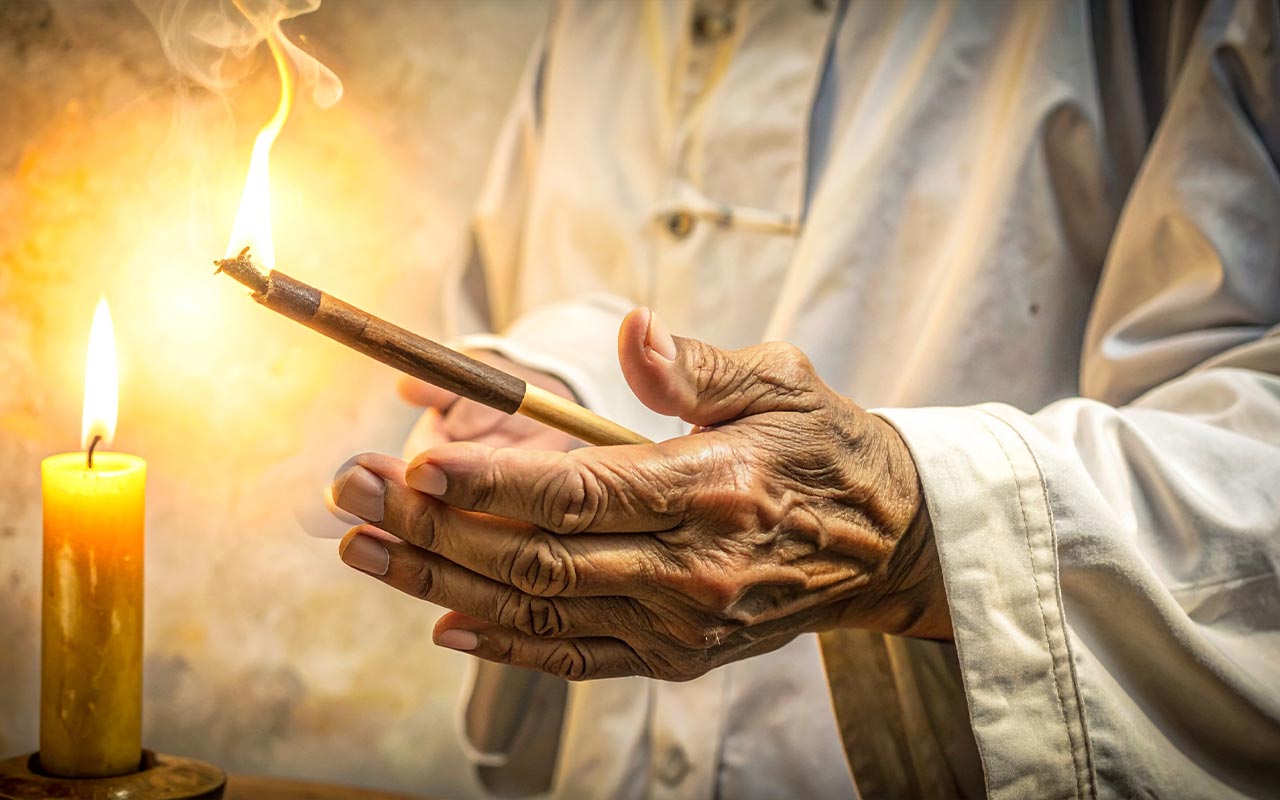
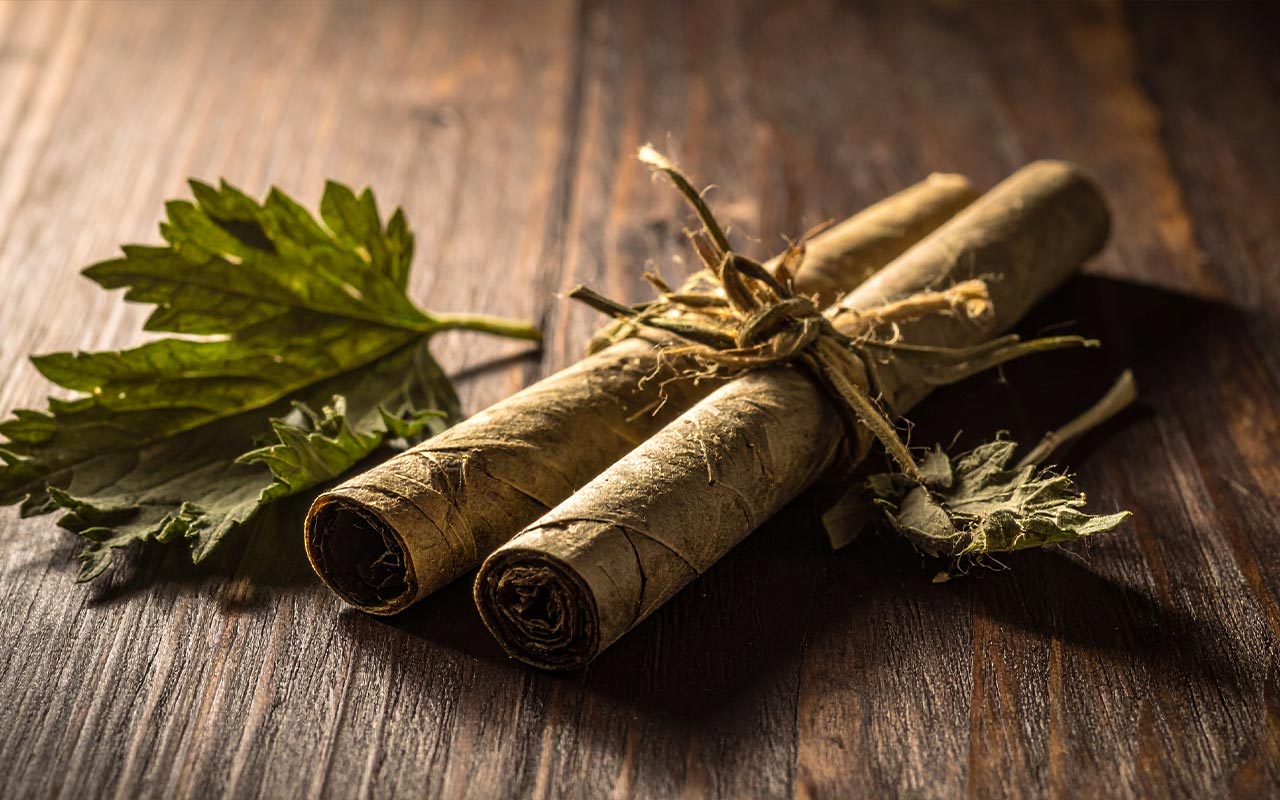
The word “moxibustion” comes from the Japanese mogusa (mugwort) and the Latin combustio (burning). In Chinese it is called jiǔ (灸) — a character depicting fire over a person, suggesting heat applied to the body. The practice involves burning compressed dried mugwort (moxa) either directly on the skin, on a medium like ginger or salt placed on the skin, or indirectly above the skin — at or near specific acupuncture points — to generate a penetrating warmth that stimulates Qi and Blood movement.
Moxa is prepared from the dried leaves of Artemisia vulgaris or Artemisia argyi — processed to varying degrees of fineness depending on application. The most refined moxa (aged, pure wool-like fibres) burns slowly and smoothly with a penetrating quality distinct from simple surface heat.
How Moxibustion Works: TCM and Biomedical Views
The TCM View
In TCM, moxibustion is used for Cold and Deficiency patterns — when warming and building are wanted more than acupuncture’s moving action. Classical sources treat moxa as complementary to needling; the line “where needles do not reach, moxa may be used” is teaching language, not a guarantee of cure.
Moxa is also used to prevent illness — particularly the classical practice of moxibustion on Stomach 36 (Zusanli) as a longevity and immunity-building practice. In feudal Japan, it was said that a person who had moxed ST36 regularly since youth should not fear long journeys, as their constitution would be strong enough to withstand any hardship.
The Biomedical View
Research on moxibustion is mixed and still limited. Local warmth and circulation are plausible; claims about white-blood-cell counts, mitochondria, and unique near-infrared spectra are not settled. The best-studied obstetric use is moxibustion at Bladder 67 (Zhiyin) for breech presentation. A 2023 Cochrane review found moderate-certainty evidence that moxibustion plus usual care probably reduces non-cephalic presentation at birth, but probably makes little or no difference to caesarean-section rates, and adverse events were poorly reported. Use only under midwife or obstetric supervision. Source: Coyle et al., Cochrane Database of Systematic Reviews, 2023.
Some researchers have proposed that moxa heat differs from ordinary infrared lamps and that moxa smoke contains bioactive compounds. That is a hypothesis, not an established mechanism. Treat home moxa as traditional warming of points, with ventilation and burn-safety, not as a proven drug-like therapy.
What Moxibustion Treats: Primary Indications
- Cold and Deficiency patterns — chronic fatigue, cold extremities, Yang deficiency (cold lower back, frequent urination, low libido, low energy in winter), Spleen deficiency (poor digestion, loose stools, bloating after eating)
- Menstrual disorders from Cold — dysmenorrhoea with cold-type presentation (pain relieved by heat, dark clotty blood, cold sensations in the lower abdomen), irregular cycles with Cold patterns
- Digestive weakness — chronic loose stools, IBS with cold or deficiency presentation, poor appetite, tendency to feel cold after eating or in cold weather
- Musculoskeletal pain from Cold and Dampness — joint pain that worsens in cold or damp weather, stiffness that improves with warmth, chronic lower back pain with cold presentation
- Immune support and prevention — seasonal moxibustion on ST36 and other tonification points to build Wei Qi and strengthen constitutional resilience
- Breech presentation — BL67 moxibustion is studied for turning a breech baby (Cochrane 2023: probably fewer breech presentations at birth, little effect on caesarean rate). Only under midwife or obstetric supervision; not a DIY substitute for external cephalic version.
Forms of Moxibustion
Moxa Stick (Most Accessible for Home Use)
A cigar-shaped roll of compressed moxa, held 2–3 cm above the skin and moved in slow circles or held stationary over the point. The sensation should be a penetrating warmth — not burning. This is the easiest and safest form for self-practice: direct control, immediate feedback, no risk of burning when used correctly. Moxa sticks are widely available online and in Chinese medicine suppliers. Smokeless moxa sticks (processed to reduce smoke output) are suitable for home use in well-ventilated spaces.
Moxa Box
A wooden or metal box with a mesh bottom, placed on the body (typically the lower abdomen or lower back) with loose moxa burning inside. Provides sustained, broad-area warming of a region rather than precise point stimulation — ideal for Cold patterns affecting the lower dantian (fertility, menstrual health, Kidney Yang deficiency) and lower back pain. Moxa boxes are inexpensive and available online.
Indirect Moxa on Ginger or Salt
A slice of fresh ginger or a layer of salt placed on the skin with a moxa cone burning on top. Ginger-separated moxa is classical for digestive and abdominal Cold patterns; salt-separated moxa on the navel (CV8) is a classical tonification treatment for severe Yang deficiency. These forms are typically performed by practitioners but can be learned with guidance.
A Home Practice Protocol
Immune Support and Yang Tonification: Stomach 36
ST36 (Zusanli) — four finger-widths below the kneecap, one finger-width lateral to the shinbone (classically 3 cun below ST35) — is among the most used tonification points in TCM. Apply a moxa stick for 5–10 minutes per leg, keeping a comfortable warmth. Practise 2–3 times per week in cooler months if it suits you. Stop if the skin is too hot; never let the stick touch the skin.
Lower Back and Kidney Yang Support
BL23 (Shenshu) — on both sides of the spine, approximately two finger-widths lateral to the lower border of the second lumbar vertebra. Using a moxa box or moxa stick, warm the kidney back-shu points for 10–15 minutes. For self-application, the moxa box is easier than a stick for the lower back. Weekly practice through autumn and winter directly nourishes Kidney Yang — the warming, activating aspect of foundational vitality that governs lower back health, energy in cold weather, and reproductive function.
Digestive Warmth: Conception Vessel 12
CV12 (Zhongwan) — midway between the navel and the lower end of the sternum. Moxa here warms the Stomach and Spleen, strengthens digestive fire, and addresses the bloating, loose stools, and post-meal fatigue of Spleen Yang deficiency. 5–10 minutes with a moxa stick, 2–3 times per week. Always wait at least an hour after eating before applying.
Contraindications
- Heat patterns — moxibustion is contraindicated in conditions of excess heat (high fever, acute inflammation, red and hot joints, Heat-type skin conditions). Adding heat to heat worsens the condition.
- Yin deficiency with empty Heat — the classic pattern of insufficient cooling causing internal heat (night sweats, hot palms and soles, sensation of heat in the evening) generally contraindicates moxa except in very specific applications by experienced practitioners
- Face, mucous membranes, and large blood vessels — never apply moxa near the eyes, over major vessels, or on sensitive facial skin
- Pregnancy — many acupuncture points are contraindicated in pregnancy; only use moxibustion during pregnancy under qualified supervision
- Impaired sensation — do not apply moxa to areas with reduced feeling (neuropathy, areas post-surgery)
Final Thoughts
Moxibustion is one of the most practically powerful tools in the TCM home practice repertoire — yet it remains underused because it looks unfamiliar. Once understood as the appropriate treatment for Cold and Deficiency patterns, and learned in its simplest form (moxa stick on ST36), it becomes an irreplaceable part of seasonal self-care. Warm the Stomach, support the Kidneys, build the Wei Qi before winter arrives. The classical physicians who said moxa prevents a thousand illnesses were pointing at something real: the body’s Yang fire, consistently nourished, sustains health through every season.
Related reading: The Spleen Meridian · The Stomach Meridian · The Kidney Meridian · Tai Chi
Sources
TCM indications below are classical teaching. Biomedical claims are limited; see Cochrane for breech moxibustion.
- Coyle ME, Smith C, Peat B. Cephalic version by moxibustion for breech presentation. Cochrane Database of Systematic Reviews 2023, Issue 5. Art. No.: CD003928.
- Chinese Medicine Atlas — acupuncture points (ST-36, BL-23, BL-67).
- Giovanni Maciocia, The Foundations of Chinese Medicine, 3rd ed. (Churchill Livingstone / Elsevier, 2015).
- National Center for Complementary and Integrative Health, Traditional Chinese Medicine: What You Need To Know.
Disclaimer: This article is for informational purposes only and does not replace professional medical advice. Always consult a qualified healthcare provider before beginning any new wellness practice. Do not use moxibustion in pregnancy except under qualified obstetric or midwifery care.