The Earth element sits at the centre of the Five Element system — not a season of its own in some classical interpretations, but the pivot between all seasons, the transition point between spring and summer, summer and autumn, autumn and winter. Its organs are the Spleen and Stomach. Its emotion is worry. Its flavour is sweet. And its central theme is the one that underlies all others: nourishment — the capacity to take in, transform, and distribute what sustains life. When the Earth element is healthy, the body is well-fed at every level. When it is compromised, everything suffers.
The Earth Element: What It Governs
In the Five Element system, Earth corresponds to late summer — the few weeks of golden ripeness between summer’s peak and autumn’s decline, when the harvest is in and nature is at its most abundant and settled. This transitional quality is central to understanding Earth: it mediates between extremes, transforms raw material into usable form, and provides the stable centre from which all movement becomes possible.
- The Spleen transforms and transports — it takes the “pure essence” extracted by the Stomach from food and drink and transforms it into Qi and Blood, then transports these throughout the body. Everything the body uses to sustain itself depends on Spleen function.
- The Spleen governs the muscles — the quality of muscle tone, strength, and the body’s capacity for sustained physical effort all reflect Spleen Qi strength.
- The Spleen holds Blood in the vessels — preventing excessive bleeding and bruising; easy bruising often indicates Spleen Qi deficiency.
- The Spleen governs thought and concentration — overthinking, circular worry, and inability to concentrate often reflect Spleen Qi imbalance.
- The mouth and lips are Earth’s sense organs — the quality of taste perception, lip colour, and the health of oral mucosa reflect Earth element vitality.
- Dampness is Earth’s pathology — when the Spleen cannot adequately transform and transport fluids, they accumulate as Dampness: the heaviness, bloating, foggy thinking, and excess weight that characterise this common pattern.
Signs of Earth Element Imbalance
Spleen Qi Deficiency (most common)
- Fatigue — particularly after eating, or a general low-level tiredness that never fully resolves with rest
- Poor appetite or cravings for sweet foods
- Bloating and digestive discomfort after meals
- Loose stools or irregular bowel function
- Muscle weakness and a tendency to feel heavy in the limbs
- Mental fogginess, difficulty concentrating, or circular overthinking
- A pale or yellowish complexion; pale lips
Dampness and Phlegm Accumulation
- A heavy, sluggish feeling in the body — particularly on waking
- Excess weight that is difficult to shift despite dietary effort
- Mental fog, difficulty with clear thinking
- Sticky or greasy coating on the tongue
- Excess mucus production
Nourishing the Earth Element: Food as Foundation
The Spleen’s Requirements
The Spleen is the organ most directly affected by diet and lifestyle — and the one most commonly compromised in modern life. It requires warmth, regularity, and ease. Cold and raw foods directly tax Spleen Yang. Irregular eating patterns disrupt Spleen rhythm. Eating at the desk while working, or in emotional distress, impairs the Spleen’s capacity to transform food into usable nourishment. These are not small considerations.
The most important dietary guidance for Earth element health: eat warm, cooked foods at regular times, in a calm setting, without distraction. Consistently applied, this is the most direct daily support for Spleen Qi in TCM — no supplement required.
Foods That Nourish the Spleen
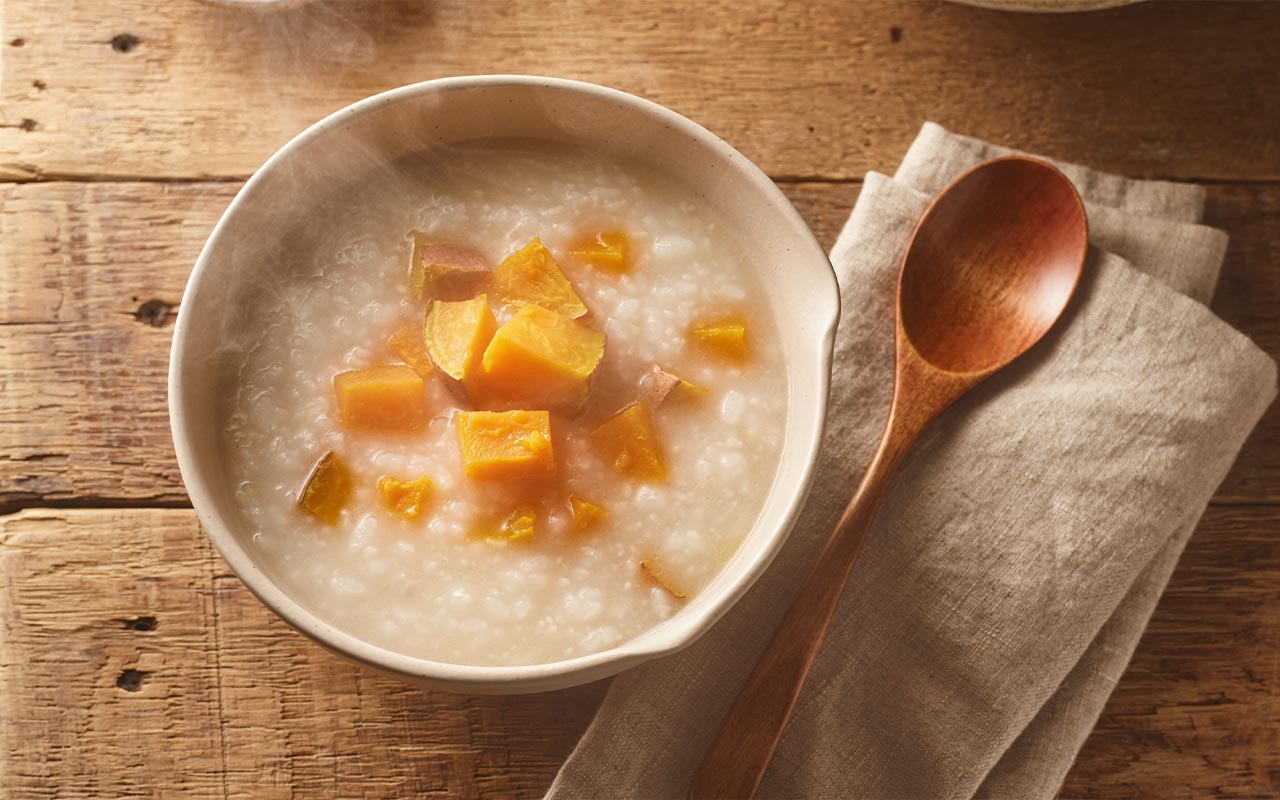
Sweet (in the TCM sense — the natural sweetness of whole foods, not refined sugar) foods enter the Spleen. Gently cooked whole grains are the foundation of Spleen-supportive eating: rice (particularly congee, the slow-cooked rice porridge used throughout Asia as a digestive restorative), millet, oats, and barley. Root vegetables: sweet potato, yam, pumpkin, carrot, parsnip. Legumes: lentils, chickpeas, adzuki beans (particularly good for Dampness). Naturally sweet vegetables: corn, peas, beetroot.
Avoid or minimise: raw salads in large quantities, cold drinks directly from the refrigerator, ice cream, excessive raw fruit, iced coffee. In people with significant Spleen deficiency, even these modest changes produce noticeable improvement in energy and digestion within days.
Acupressure for the Earth Element
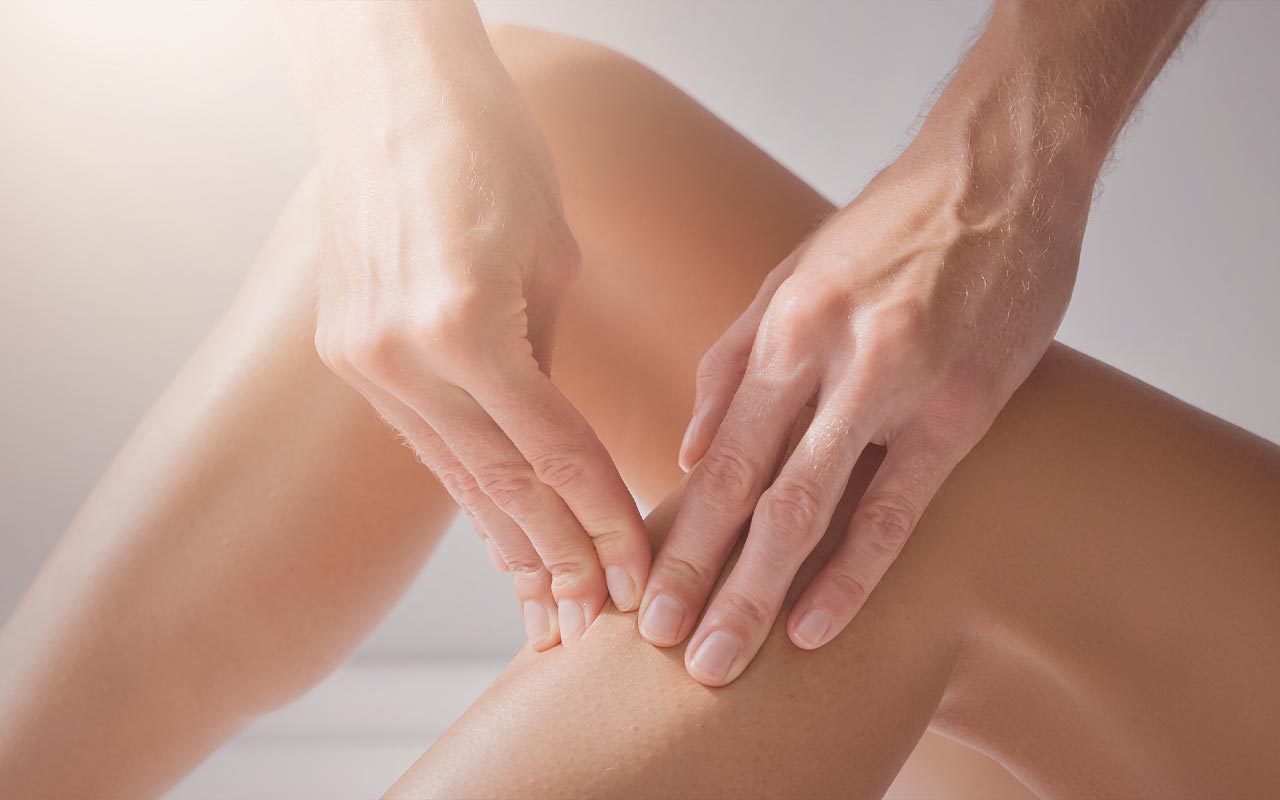
Spleen 6 — Sanyinjiao (Three Yin Meeting)
Do not use SP6 in pregnancy. Four finger-widths (about 3 cun) above the inner ankle bone, just behind the shinbone. The meeting point of the three yin meridians of the leg (Spleen, Liver, Kidney). In TCM it nourishes Blood and Yin, tonifies the Spleen, harmonises the Liver, and supports the Kidney. For Earth element support, pressing SP6 daily for 2–3 minutes per side is a traditional way to support Spleen Qi — skip it entirely if you are pregnant.
Stomach 36 — Zusanli (Leg Three Miles)
Four finger-widths below the kneecap, one finger-width lateral to the shinbone (classically 3 cun below ST35). In TCM this is among the most important tonification points — used to support Qi, Spleen and Stomach, and Wei Qi. Pressing ST36 for 3–5 minutes per side daily is a core Earth-element self-care practice for fatigue and digestive weakness; treat it as traditional support, not a longevity guarantee.
Conception Vessel 12 — Zhongwan (Middle Cavity)
Midway between the navel and the lower sternum. The front collecting (Mu) point of the Stomach. Gentle clockwise massage of CV12 for 3–5 minutes after meals (or when bloating arises) is a traditional way to support Stomach descending Qi. Accessible abdominal self-care — not an instant fix for all digestive complaints.
The Emotional Practice: From Worry to Trust
The Earth element’s emotion is worry — and specifically the kind of circular, repetitive thinking that goes over the same ground without resolution. This is distinct from the Liver’s frustrated anger or the Kidney’s existential fear: Earth worry is the endless rehearsal of what might go wrong, the compulsive planning that never quite arrives at peace, the mental chewing that substitutes for actual digestion.
The Earth element’s antidote to worry is not positive thinking but trust — trust in the body’s capacity to nourish itself, trust that enough has been done, trust in the ground beneath one’s feet. Practically, this means interrupting the worry loop through physical sensation: eating a warm meal slowly and with attention, pressing ST36 and feeling the earth beneath the feet, or simply sitting quietly for five minutes with both feet flat on the floor and both hands on the lower abdomen. The Earth element responds to groundedness, and groundedness is always available — in the body, in the present moment, in the simple act of returning to sensory experience.
Final Thoughts: The Ground of Everything
Every other element depends on Earth. The Liver cannot smooth Qi without the Blood the Spleen produces. The Lungs cannot disperse without the Qi that Spleen generates. The Kidneys cannot be replenished without the postnatal essence that Spleen extracts from food. This is why classical TCM places such emphasis on protecting and nourishing the Spleen — not as a single organ among equals, but as the root of postnatal vitality without which everything else runs dry. Warm food, regular meals, adequate rest, and the simple daily practice of ST36 are not small things. They are the foundation.
Related reading: The Spleen Meridian · The Stomach Meridian
Sources
Point locations and organ theory follow classical TCM teaching; they are not a biomedical diagnosis.
- Me & Qi — Spleen (Earth / Root of Postnatal Qi) — transformation and transportation, Dampness, worry, late summer.
- Chinese Medicine Atlas — acupuncture points (ST-36, SP-6 including the pregnancy restriction).
- Giovanni Maciocia, The Foundations of Chinese Medicine, 3rd ed. (Churchill Livingstone / Elsevier, 2015).
- National Center for Complementary and Integrative Health, Traditional Chinese Medicine: What You Need To Know; Acupuncture: Effectiveness and Safety.
Disclaimer: This article is for informational purposes only and does not replace professional medical advice. Always consult a qualified healthcare provider before beginning any new wellness practice.