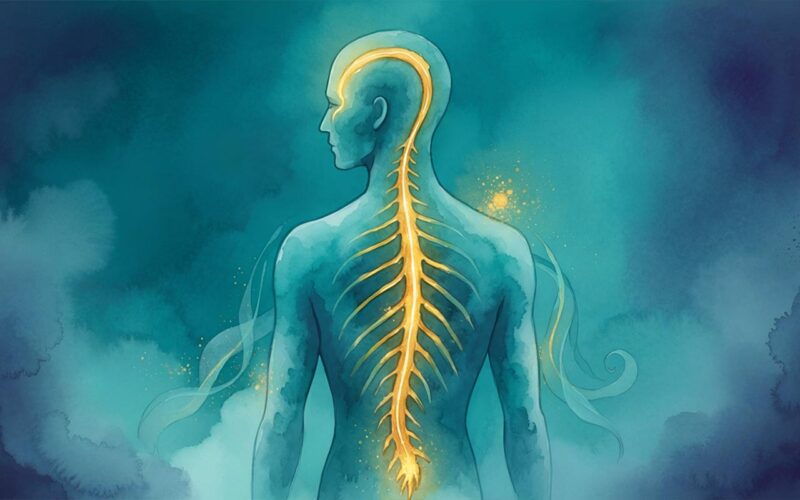
Of all the organs in Traditional Chinese Medicine, the Triple Burner — also called the Triple Warmer, Triple Heater, or San Jiao — is the most enigmatic. It is the only organ in TCM that has no precise anatomical counterpart in Western medicine. It cannot be dissected, isolated, or pointed to on a diagram. And yet it governs one of the most fundamental functions of the body: the regulation of warmth, water metabolism, and the distribution of energy throughout the three major body cavities. Understanding the Triple Burner is understanding TCM’s vision of the body as a unified energetic system.
What Is the Triple Burner?
The Triple Burner (San Jiao in Chinese — literally “Three Burners” or “Three Cavities”) is a Yang organ — the Yang partner of the Pericardium — that belongs to the Fire element. Unlike every other organ in TCM, it is not defined by a specific tissue or anatomical structure but by a function: the coordination and integration of the three body cavities, each associated with different organ groups and energetic processes.
Classical TCM texts describe the Triple Burner as “having a name but no form” — meaning its existence is defined by what it does rather than what it is. Modern TCM scholars have interpreted it variously as the fascial network, the lymphatic system, the autonomic nervous system, or simply a functional concept encompassing the body’s temperature regulation, fluid metabolism, and Qi transformation systems. None of these interpretations is definitive — the Triple Burner remains, in a meaningful sense, a mystery.
What is clear and clinically useful is its threefold division of the body:
The Upper Burner (Shang Jiao)
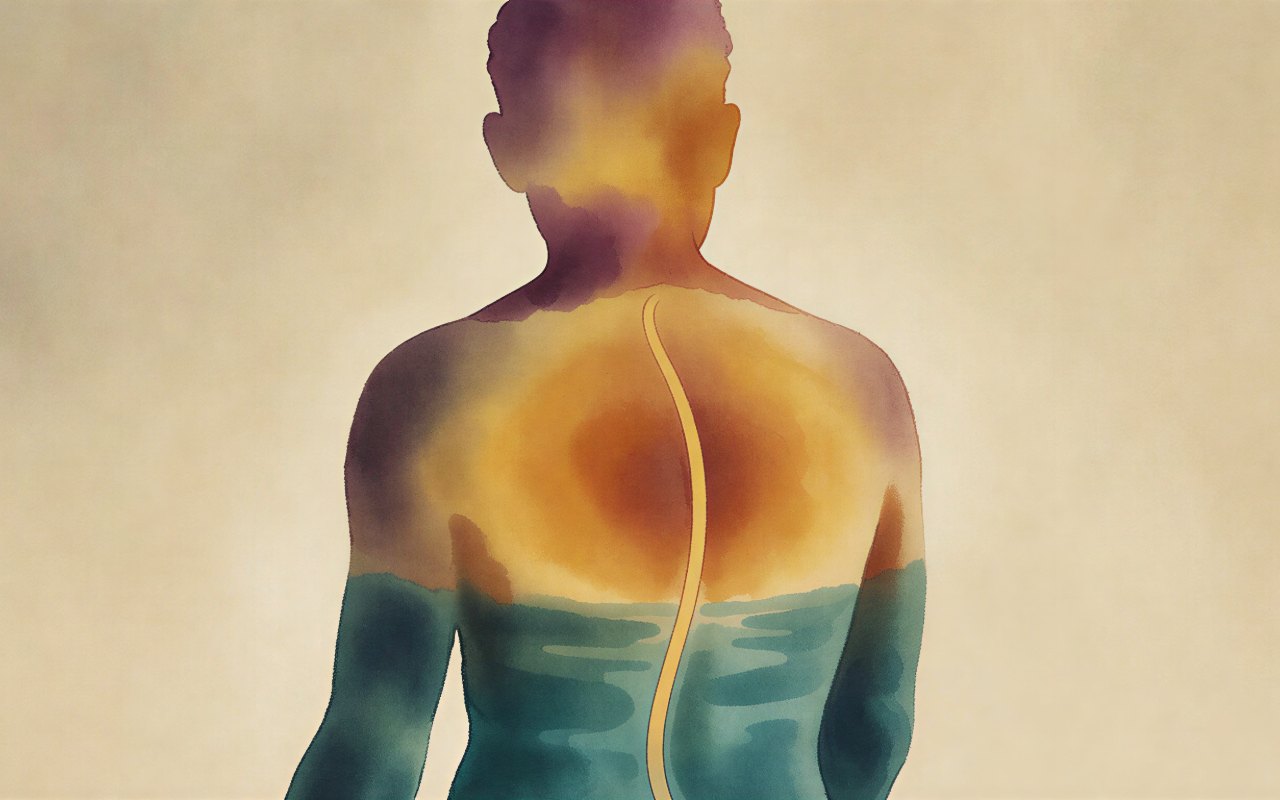
The Upper Burner encompasses the chest cavity — the Heart and Lungs. It governs respiration, circulation, and the distribution of Qi and Blood throughout the body. In TCM metaphor, it is “like a mist” — fine, dispersing, spreading Qi and fluids as a fine mist throughout the entire body.
The Middle Burner (Zhong Jiao)
The Middle Burner encompasses the abdominal cavity above the navel — the Spleen, Stomach, Liver, and Gallbladder. It governs digestion, transformation of food into Qi and Blood, and the rotting and ripening of food. In TCM metaphor, it is “like a bubbling cauldron” — the active, transformative fire at the centre of digestion.
The Lower Burner (Xia Jiao)
The Lower Burner encompasses the pelvic cavity below the navel — the Kidneys, Bladder, Large Intestine, Small Intestine, and reproductive organs. It governs the separation of pure from impure in the later stages of digestion, the excretion of waste, and the storage and regulation of foundational Yin and Yang. In TCM metaphor, it is “like a drainage ditch” — the channel through which waste and excess fluids are separated and eliminated.
The Pathway of the Triple Burner Meridian
The Triple Burner Meridian (Shou Shao Yang — Hand Lesser Yang) runs from the ring finger up the outer arm to the shoulder, neck, and face. With 23 points, it travels the outer surface of the arm — complementing the Pericardium’s inner arm pathway.
Its pathway:
- Begins at the outer corner of the ring fingernail at Triple Burner 1 (Guanchong)
- Travels up between the fourth and fifth metacarpals on the back of the hand
- Crosses the wrist at Triple Burner 4 (Yangchi) and Triple Burner 5 (Waiguan)
- Ascends the outer forearm between radius and ulna
- Passes through the elbow at Triple Burner 10 (Tianjing)
- Continues up the outer upper arm to the shoulder
- Crosses to the back and then ascends the neck
- Circles the ear and ends at the outer eyebrow at Triple Burner 23 (Sizhukong)
The meridian’s pathway around the ear explains why the Triple Burner Meridian is so frequently involved in ear conditions: tinnitus, hearing problems, ear infections, and TMJ pain are all addressed through this channel. Its pathway around the eye explains its use in headaches at the temples and eye conditions.

The Triple Burner Meridian is most active between 9pm and 11pm according to the TCM organ clock — the late evening hours when the body should be completing its transition toward sleep, and when the Triple Burner’s integrating and regulating function helps prepare the entire system for the night’s restorative work.
What the Triple Burner Meridian Governs
- Integration of the three body cavities — coordinates the Upper, Middle, and Lower Burners and ensures they function as a unified whole
- Regulation of body temperature — distributes Yang Qi (warmth) throughout the body; Triple Burner dysfunction often manifests as temperature dysregulation (alternating hot and cold, persistent chilliness, or inappropriate sweating)
- Water metabolism and fluid distribution — the Triple Burner is one of the primary pathways through which water and fluids move through the body; dysfunction leads to oedema, difficulty urinating, or accumulation of dampness
- The original Qi (Yuan Qi) — the Triple Burner is the pathway through which the Kidney’s original Qi — the foundational energy inherited at birth — circulates to all organs and meridians
- The ear and lateral head — the meridian’s pathway makes it central to ear health, temporal headaches, and conditions of the lateral face
- The immune system (Wei Qi) — in some TCM frameworks, the Triple Burner helps distribute the protective Wei Qi that circulates at the body’s surface
Signs of Triple Burner Meridian Imbalance
Upper Burner Dysfunction
- Chest tightness and difficulty breathing deeply
- Palpitations and heart irregularities
- Difficulty distributing warmth to the extremities
Middle Burner Dysfunction
- Digestive weakness, bloating, and nausea
- Inability to transform food efficiently into Qi and Blood
- The accumulation of Dampness and Phlegm from poor transformation
Lower Burner Dysfunction
- Difficulty urinating or urinary incontinence
- Oedema in the lower limbs
- Constipation or diarrhoea from poor separation of pure and impure
- Reproductive difficulties
Meridian-Level Imbalance
- Tinnitus — ringing or buzzing in the ears
- Hearing difficulties
- Temporal headaches (pain at the sides of the head)
- Pain or stiffness along the outer arm, elbow, or shoulder
- TMJ dysfunction and jaw pain
- Alternating chills and fever
Key Acupuncture Points on the Triple Burner Meridian
Triple Burner 5 — Waiguan (Outer Gate)
Located on the outer forearm, three finger-widths above the wrist crease, between the radius and ulna — the mirror image of Pericardium 6 on the opposite side of the arm. This is the most important point on the Triple Burner Meridian. It is the master point of the Yang Wei Mai (Yang Linking Vessel), which connects all Yang meridians — making it one of the most powerful points for releasing exterior pathogenic factors (colds, flu, early-stage illness) and resolving conditions along the entire Yang aspect of the body.
TB5 is used clinically for headaches (especially temporal and occipital), ear problems, neck and shoulder stiffness, fever, and the early stages of illness. It is the most commonly used point for conditions that manifest on the side of the body — the Shao Yang territory. For self-acupressure, pressing TB5 and PC6 simultaneously — one on the outer wrist, one on the inner — creates a powerful balancing effect on the Fire element.
Triple Burner 17 — Yifeng (Wind Screen)
Located in the depression just behind the earlobe, between the mastoid process and the mandible. In TCM, this is the main point for ear complaints on the Triple Burner Meridian — tinnitus, ear pain, ear infections, hearing difficulty, and facial paralysis. Its name “Wind Screen” reflects its function of expelling Wind — the TCM pathogen associated with sudden-onset conditions that attack the head and face. Some people find that pressing this point gently but firmly eases the discomfort during an episode of tinnitus or ear pain. Ear infections, sudden hearing loss, and facial paralysis always need prompt medical care.
Triple Burner 21 — Ermen (Ear Gate)
Located just in front of the ear, in the depression above the tragus (the small cartilage flap in front of the ear canal) when the mouth is slightly open. Along with Small Intestine 19 and Gallbladder 2, this forms the classic “three ear points” used in TCM for many ear complaints. Pressing all three simultaneously — in front of the ear, at the ear gate, and behind the earlobe — is a traditional self-care practice for tinnitus and ear discomfort. It does not replace a medical examination.
Triple Burner 4 — Yangchi (Yang Pool)
Located on the back of the wrist, in the depression at the centre of the wrist crease. This is the source point of the Triple Burner Meridian — it directly tonifies the Triple Burner’s Yuan Qi (original Qi) and is used for conditions of the wrist, forearm, and shoulder, as well as for general weakness of the Triple Burner’s regulating function. Combined with TB5 in acupressure practice, it reinforces the meridian’s overall regulatory capacity.
Daily Practices to Support the Triple Burner Meridian
1. Press TB5 (Waiguan) for Headaches and Ear Conditions
Find the point three finger-widths above the outer wrist crease, between the two forearm bones. Apply firm, steady pressure for two to three minutes on each arm. This point is particularly effective for temporal headaches (pain at the sides of the head), neck stiffness, and the early stages of a cold or flu. Pressing it simultaneously with PC6 on the inner wrist creates the “inner-outer gate” combination — one of the most balancing acupressure techniques for the forearm, wrist, and Fire element overall.
2. The Ear Tapping Practice
This classical Qigong practice stimulates all three ear meridian points simultaneously and is one of the simplest and most immediately effective self-care practices for ear health and tinnitus:
- Place both palms over your ears, fingers pointing toward the back of the head
- Interlace the fingers at the back of the skull
- Press the palms firmly against the ears — you should hear a muffled, ocean-like sound
- Using your index fingers, tap the middle fingers 24 times — each tap creates a drumming sound inside the ear (the “Heavenly Drum” technique)
- Release the hands quickly — the sudden pressure change and sound stimulates the ear meridian points
This practice is traditionally recommended for tinnitus, hearing decline, and headaches. Some people report that their tinnitus feels less intense after a few rounds, though results vary and this is not a medical treatment.
3. Regulate Sleep Timing — Honour the Triple Burner’s Window
The Triple Burner is most active between 9pm and 11pm — the final integrating phase before midnight. This is the body’s window for completing the day’s metabolic processes, regulating temperature, and preparing for the deep restorative sleep of the Gallbladder and Liver hours (11pm–3am).

Being asleep — or at minimum in a state of quiet rest — by 11pm allows the Triple Burner’s regulatory work to complete without interruption. This is one of the reasons why chronic late nights are considered so damaging in TCM: they interrupt the Triple Burner’s nightly integration, leading over time to temperature dysregulation, fluid accumulation, and a depletion of the original Qi that the Triple Burner distributes throughout the body.
4. Keep the Neck and Shoulders Warm
The Triple Burner Meridian traverses the outer shoulder and neck — areas that in TCM are particularly vulnerable to Wind and Cold invasion. Keeping these areas covered and warm, especially in cold or windy weather, directly supports the Triple Burner’s defensive function.
In practice: wear a scarf in cold weather, avoid sitting in direct drafts, and if you tend toward neck stiffness, cold sensitivity, or frequent colds and flu, consciously attending to the warmth of the neck and upper back is one of the simplest preventive interventions available.
5. Lateral Stretches — Opening the Shao Yang Territory
The Triple Burner Meridian runs along the lateral (outer) aspect of the body — what TCM calls the Shao Yang territory, shared with the Gallbladder Meridian. Lateral stretches that open the sides of the body directly stimulate both channels.
A simple practice: stand with feet shoulder-width apart. Raise your right arm and lean slowly to the left, allowing a deep stretch along the entire right side — from the wrist, up the outer arm, through the shoulder and neck, and down the flank. Hold for 30–60 seconds, breathing into the stretch. Repeat on the other side. This movement opens the Triple Burner and Gallbladder channels simultaneously and can noticeably relieve tightness in the neck, shoulders, and flanks.
The Triple Burner and Systemic Integration
Perhaps the Triple Burner’s most important conceptual contribution to TCM is the idea that the body is not a collection of separate organs but a unified system that requires continuous integration. The Upper, Middle, and Lower Burners do not function independently — they depend on each other, and the Triple Burner is what keeps them coordinated.
This integrative vision — that health is not the sum of individual organ functions but the quality of their relationship — is one of TCM’s most profound insights, and one that resonates deeply with modern systems biology. The body as a network, not a machine. The Triple Burner as the network’s coordinator.
Final Thoughts: The Great Integrator
The Triple Burner Meridian holds the body’s three great territories in relationship — the breath and spirit of the Upper, the fire and transformation of the Middle, the roots and elimination of the Lower. When this integration is working well, there is a quality of coherence that permeates the entire body: temperature is steady, fluids move freely, energy circulates without obstruction.
Press TB5 for headaches and ear conditions. Practice the Heavenly Drum for tinnitus. Be in bed by 11pm. Keep the neck warm. Stretch the sides of the body. These are the Triple Burner’s daily invitations — simple, practical, and quietly integrative.
Related reading: Understanding Meridians · The Pericardium Meridian · The Heart Meridian · The Small Intestine Meridian · What Is Qigong?
Sources
The Triple Burner concept, meridian pathways, organ-clock times and point locations follow classical TCM teaching; they are not a biomedical diagnosis, and the Triple Burner has no confirmed anatomical counterpart.
- Giovanni Maciocia, The Foundations of Chinese Medicine, 3rd ed. (Churchill Livingstone / Elsevier, 2015).
- National Center for Complementary and Integrative Health, Traditional Chinese Medicine: What You Need To Know.
- Me & Qi: Waiguan SJ-5 (location and classical indications).
- Langevin HM, Yandow JA, Relationship of acupuncture points and meridians to connective tissue planes, The Anatomical Record 2002 (the fascia interpretation).
- Linde K et al., Acupuncture for the prevention of tension-type headache, Cochrane Database of Systematic Reviews 2016.
- National Institute on Deafness and Other Communication Disorders (NIDCD), Tinnitus.
- Lim S, WHO Standard Acupuncture Point Locations, Evidence-Based Complementary and Alternative Medicine 2010 (overview of the WHO standard for the 361 classical points).
Disclaimer: This article is for informational purposes only and does not replace professional medical advice. Sudden hearing loss, new or persistent tinnitus, swelling, or difficulty urinating should always be checked by a doctor promptly. Consult a qualified healthcare provider before beginning any new wellness practice.