The Metal element is the most misunderstood of the Five Elements — partly because its season is autumn, the season of endings and decline, and its primary emotional quality is grief. In a culture that values constant growth and positive energy, an entire element dedicated to letting go, to the beauty of what passes, and to the necessary clearing that makes space for what comes next, can seem unwelcome. Yet TCM considers the Metal element’s capacity for release one of the most essential qualities a person can cultivate — and its deficiency one of the most widespread sources of chronic suffering in modern life.
The Metal Element: What It Governs
Metal is the element of autumn, of harvest and descent, of the turning inward that precedes winter’s deep rest. Its organs are the Lung (Yin) and Large Intestine (Yang). Its sense organ is the nose. Its tissue is the skin — the body’s outermost boundary, the interface between self and world. Its emotion is grief. Its virtue is Yi — sometimes translated as righteousness or precision, the capacity to discern what is truly valuable and to release what is not.
- The Lung receives the pure Qi of Heaven — through breath, it takes in what is needed from the outside world and distributes it throughout the body. It is the organ most intimately connected to the present moment — breath happens only now.
- The Lung disperses and descends — Wei Qi (defensive energy) to the surface; fluids to the Kidney; the body’s rhythm outward into the world. When the Lung’s dispersing function is impaired, Wei Qi weakens, the skin loses its lustre, and the person becomes more vulnerable to external pathogenic factors.
- The Large Intestine completes the letting go — in TCM, elimination is physical and metaphorical: the capacity to release what has been processed and no longer serves. Chronic constipation is sometimes read that way in clinic; it is not a diagnosis of character.
- The skin breathes and communicates — skin conditions, excessive or insufficient sweating, and poor skin quality often reflect Metal element imbalance.
Grief: The Metal Element’s Emotion
Grief is the Lung’s emotion — and like all TCM emotions, it is not pathological in itself. The capacity to grieve fully and completely is a sign of healthy Metal element function. Grief that can be felt, expressed, and released — through tears, through the deep sighing breath that is the Lung’s natural release mechanism, through the honest acknowledgment of loss — passes through and leaves the body cleaner.
The problem arises when grief cannot complete its cycle: when it is suppressed, avoided, or held indefinitely. Unprocessed grief accumulates in the Lung — it becomes the chronic tightness in the chest, the shallow breath, the low-grade sadness that persists without a clear object, the loss of inspiration (literally, the inability to breathe in fully), and eventually the vulnerability to respiratory illness that TCM associates with Lung Qi deficiency.
In TCM teaching, unprocessed grief is associated with the Lung. Practitioners may work with both the physical pattern (cough, recurrent chest tightness) and the emotion. That is classical correspondence, not a claim that grief causes asthma.
Signs of Metal Element Imbalance
Metal Deficiency (most common)
- Difficulty letting go — of relationships, possessions, old grievances, past identities
- A sense of loss or emptiness that lacks a clear object
- Shallow breathing; chest tightness; frequent sighing
- Recurrent respiratory illness; weak immune function at the surface level
- Skin that lacks lustre; dry skin; excessive or deficient sweating
- Difficulty with boundaries — either too rigid or too porous
- Constipation or irregular elimination
Metal Excess
- Perfectionism and the inability to accept imperfection or loss
- Rigidity and difficulty with change or transition
- Excessive control and the inability to surrender
- Prolonged, stuck grief that does not move or resolve
Supporting the Metal Element: Practical Practices
Breathwork — The Lung’s Direct Medicine
The most immediate Metal-element practice is conscious breathing — especially the extended exhale. In TCM the exhale is the Lung’s letting go. A longer out-breath is also a common way to settle the nervous system; treat it as a practice, not a medical device.
A simple daily practice: inhale for 4 counts, exhale for 7–8 counts. Ten minutes in the morning. The extended exhale — longer than feels entirely comfortable — trains the Lung’s releasing function at both the physiological and energetic levels.
Acupressure for the Metal Element
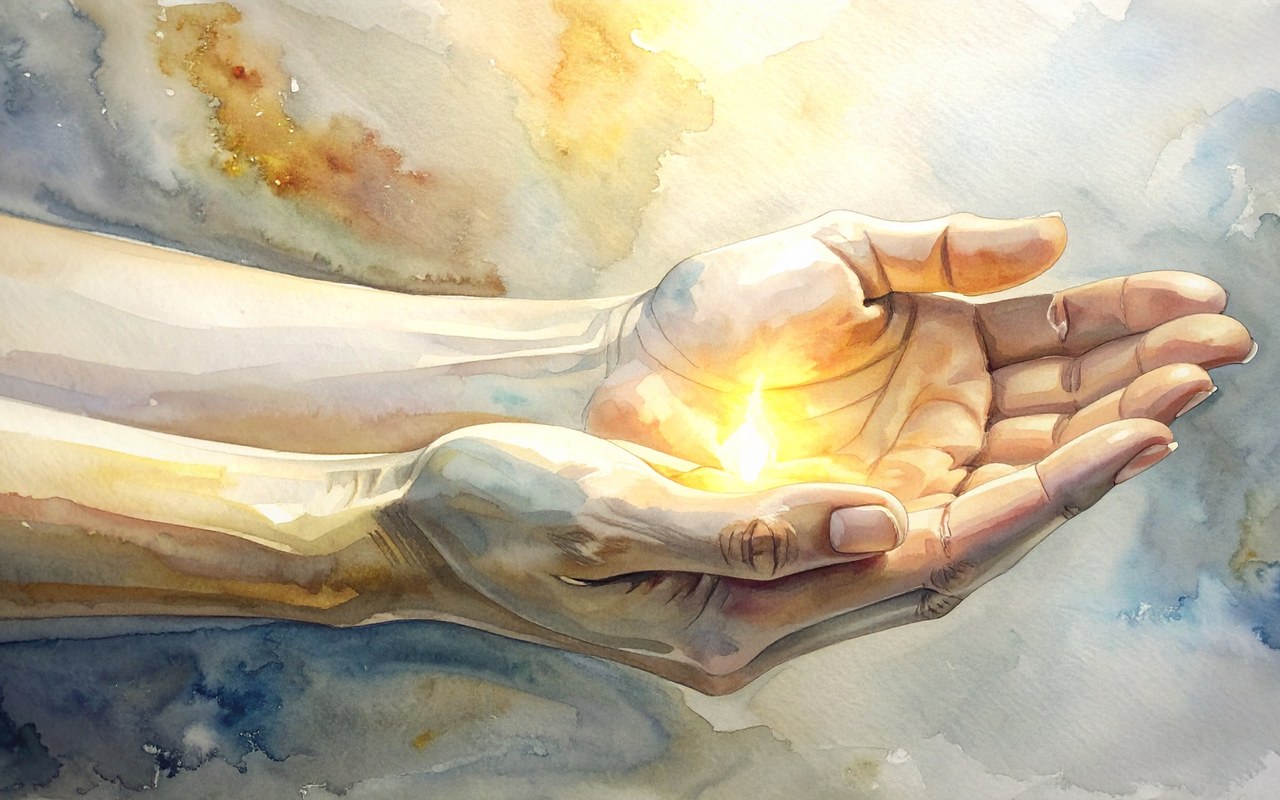
Lung 7 (Lieque) — about 1.5 cun (two finger-widths) proximal to the wrist crease, in the V-shaped depression above the radial styloid on the thumb side — not on the crease itself (that is LU-9). Luo-connecting point of the Lung and confluent point of the Ren Mai. Press for about 2 minutes per wrist while breathing slowly. In TCM it is used to descend and disperse Lung Qi and for head–neck–throat patterns.
Large Intestine 4 (Hegu) — in the web between thumb and index finger. Often paired with LU-7 in Metal-element work. Press for about 2 minutes per hand. Do not use LI-4 in pregnancy.
Lung 1 (Zhongfu) — Front-Mu of the Lung, in the first intercostal space, about 6 cun lateral to the midline (below the outer collarbone, not three finger-widths from the sternum). Acupressure only: rest two fingers here and breathe for 2–3 minutes. Do not needle this point yourself — it sits over the lung apex. Some people feel chest ease or emotion; that is optional, not required.
The Letting Go Practice

The Metal element’s deepest practice is not physical but attitudinal: the cultivation of a genuine willingness to release. This applies to the obvious losses — relationships that have ended, people who have died, chapters that have closed — but also to the subtler holdings: old identities (“I am someone who…”), grievances nursed beyond their usefulness, possessions that represent a past self, and the perfectionism that prevents the natural imperfection of life from being received.
Autumn is the natural season for this practice — the trees demonstrate it with effortless elegance. But the Metal element’s letting go is available in every moment of every season, in every conscious exhale, in every genuine acknowledgment of loss, in every decision to release what is finished.
Foods That Support Metal
Pungent/spicy foods enter the Lung Meridian: ginger, garlic, onion, leek, radish, cinnamon, cardamom — all used in Chinese medicine to open and disperse Lung Qi. White foods have an affinity with the Metal element: pears (the classic Lung-moistening food, particularly useful for dry coughs and dry skin), white radish, cauliflower, onions, tofu. For Lung Yin deficiency (dry cough, dry skin, night sweats): lily bulb, white fungus (tremella), pears cooked with honey, and adequate hydration.
Final Thoughts: The Gift of Impermanence
The Metal element teaches something that every spiritual tradition confirms: that the capacity to let go is not a weakness but the condition for genuine aliveness. The tree that cannot release its leaves in autumn carries dead weight through winter and cannot put forth new growth in spring. The person who cannot release — grief, resentment, attachment, old identity — carries the same dead weight, the same obstruction to the new that wants to grow.
Breathe out fully. Release what is finished. Make space. The Metal element’s gift is the clean simplicity of what remains when everything unnecessary has been let go.
Related reading: The Lung Meridian · The Large Intestine Meridian · The Fire Element in Summer · The Earth Element
Sources
Five-element correspondences and point locations follow classical TCM teaching; they are not a biomedical diagnosis.
- Me & Qi — LU-7 Lieque (1.5 cun proximal to the wrist crease) and LU-1 Zhongfu (1st intercostal space, 6 cun lateral).
- Chinese Medicine Atlas — acupuncture points (LU-7 two finger-widths above the crease; LI-4 pregnancy restriction).
- Giovanni Maciocia, The Foundations of Chinese Medicine, 3rd ed. (Churchill Livingstone / Elsevier, 2015).
- National Center for Complementary and Integrative Health, Traditional Chinese Medicine: What You Need To Know.
Disclaimer: This article is for informational purposes only and does not replace professional medical advice. Always consult a qualified healthcare provider before beginning any new wellness practice. Do not use LI-4 in pregnancy.